The Barista Method by The Zariya Academy
About

About The Barista Method.

Coffee is a craft. Understanding it changes everything.

The Barista Method (TBM) is a barista education programme run by The Zariya Academy, part of The Zariya Collective, in Nazirabad, Kolkata. It was founded by Shubham Jaiswal, an architect and coffee entrepreneur who started in coffee in 2022.

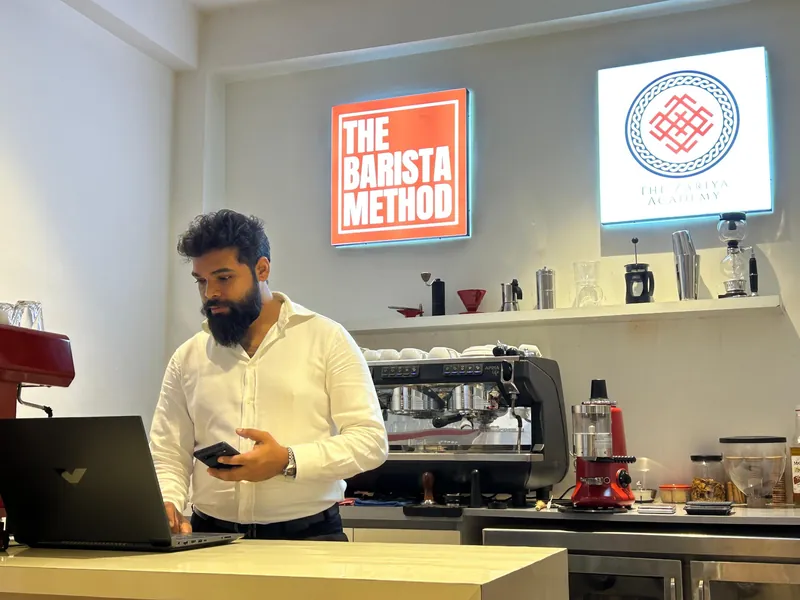
Shubham Jaiswal at the bar of The Zariya Academy lab, with The Barista Method and Zariya Academy signs behind him
DrawingShubham Jaiswal at the lab
ScaleNTS
SheetABT-00
Our starting point

Coffee as a series of things to discover.

The Barista Method began with a simple observation: coffee is often taught as a series of things to do, when it deserves to be understood as a series of things to discover.

Behind every cup is a world of agriculture, processing, roasting, extraction, sensory perception, chemistry, hospitality, and human connection. Yet, somewhere between learning a recipe and serving a customer, much of that world gets lost.

We believe a better understanding of coffee creates better baristas, more thoughtful professionals, and a stronger coffee culture.

The Barista Method exists to make that understanding accessible.

Not by making coffee unnecessarily complicated, nor by reducing it to a collection of shortcuts, but by bringing together the science, skill, sensitivity, and curiosity that the craft deserves.

How it began

We came to coffee by doing coffee.

Our story did not begin in a classroom. It took shape through the practical realities of the coffee business: understanding the bean, working with roasting profiles, developing blends, building relationships with cafés and restaurants, and learning what it takes to bring an idea from a workbench to someone’s everyday cup.

I started in coffee in 2022, the year I established Nen Roasting Company. Through Nen, the journey moved beyond an appreciation for coffee into the business of making it matter. We worked with clients across Kolkata, while pursuing a belief that would remain central to our thinking:

Value should not be reserved for a privileged few.

Good coffee, meaningful knowledge, and the ability to appreciate the difference should not be inaccessible simply because the industry sometimes makes them feel that way.

But working in coffee also reveals a more complicated reality. A technically excellent product still depends on the people who prepare it, the systems that support them, the decisions made behind the counter, and the quality of the experience delivered to the customer.

Through Nen, I experienced coffee not only through roasting and the supply side of the business, but also from the café owner’s perspective: consistency, operations, customer expectations, commercial decisions, and the many things that have to work together before a good cup reaches someone.

It is one thing to know what makes a coffee good. It is another to understand what it takes to serve it well, repeatedly, within the realities of a working business. That distinction matters.

The more we experienced the industry, the more we understood that coffee is not one skill. It is a relationship between many skills. And those skills make considerably more sense when they are understood together.
The architect’s view

An architect’s way of looking at coffee.

There is another influence behind The Barista Method, one that might seem less obvious at first: architecture and design. My background as an architect, and my continued interest in design, have shaped the way I approach coffee in fundamental ways.

Architecture teaches you to look beyond an individual object and understand the relationships that make an entire experience possible. A building is not simply a collection of walls, materials, and structures. It is an interconnected system shaped by people, movement, function, context, and intention. The quality of the whole depends on how well its parts work together.

I see a similar relationship in coffee. A cup is not produced by a recipe alone. It is the outcome of multiple variables interacting: the coffee itself, the roast, the grind, the water, the brewing method, the equipment, the person preparing it, and the conditions under which it is served.

Change one variable, and the experience can change with it. Understand the relationships between them, and you begin to see possibilities that a recipe alone cannot teach you.

Design adds another dimension. It asks us to consider not only whether something works, but how it is experienced. In a café, that experience extends beyond the beverage to the environment, the service, the interaction, and the feeling a person carries away.

Coffee provides the subject. Architecture and design influence the way we learn to understand it.

From making to understanding

From making coffee to understanding it.

The transition from coffee entrepreneurship to coffee education was not a departure from the journey. It was a consequence of it.

We had seen how much knowledge goes into creating a good cup. We had also seen how easily that knowledge can become fragmented: recipes without reasoning, techniques without context, and routines performed without a clear understanding of the variables involved.

A barista may learn how to operate an espresso machine without fully understanding extraction. They may memorise a brewing ratio without learning how to evaluate the result. They may develop speed without developing consistency, or acquire technical competence without learning how to communicate with the person on the other side of the counter. These are not failures of individuals. Often, they are limitations of the way the craft is taught.

The Barista Method was created to bring together the what, the how, and, most importantly, the why of coffee. Understanding the reason behind a technique does more than help someone reproduce a result. It helps them recognise when the result needs to change. That is the difference between following instructions and developing judgement.

Our approach is informed by three connected perspectives:

The roaster

Attention to the coffee itself.

The café owner

Understanding of the practical and commercial realities.

The architect

The instinct to examine the relationships between individual parts and the larger system.

None of these perspectives is sufficient on its own. Together, they help us ask better questions about what we teach, how we teach it, and what a learner should ultimately be able to do.

More than a course

Five connected areas of learning.

We see coffee education as something larger than a syllabus or a certificate. It is the process of learning to observe, interpret, experiment, and make informed decisions. And coffee is prepared for people. Communication, attentiveness, consistency, service, and the ability to make someone feel welcome are not secondary considerations. They are part of what makes a barista good at what they do.

Module 1 · Coffee Unlocked

Coffee Fundamentals

Understanding the journey from bean to cup, including the origins and processes that shape coffee.

Module 2 · Barista’s Palate

Sensory Understanding

Developing the ability to taste, identify differences, articulate observations, and make sense of what is in the cup.

Module 3 · Brewing Mastery

Brewing

Learning how variables interact, how extraction works, and how to make deliberate adjustments rather than depend on guesswork.

Module 4 · The Espresso Code

Espresso and Milk Science

Building practical competence through an understanding of the principles behind espresso preparation, milk behaviour, and consistency.

Module 5 · The Barista’s Edge

Professional Practice and Hospitality

Developing the communication, awareness, and service skills required to translate technical ability into a meaningful customer experience.

These are not isolated subjects to be memorised and forgotten. They are parts of a connected discipline. Our aim is not simply to teach someone to make a good cup of coffee under ideal conditions. It is to help them understand what they are doing well enough to respond when conditions are less than ideal. Because that is where real competence begins.

See the full course

Our philosophy

Knowledge without unnecessary barriers.

We believe good education should be rigorous without being intimidating, accessible without being diluted, and practical without losing intellectual depth.

Coffee has its own language, and learning that language matters. But terminology should clarify understanding, not become a substitute for it. A student should not have to pretend to understand something to feel that they belong. They should be encouraged to ask better questions, challenge assumptions, make mistakes, and learn from what those mistakes reveal.

We value curiosity over pretence, reasoning over rote learning, and consistent practice over the performance of expertise.

We also believe there is no contradiction between taking a craft seriously and making it welcoming. The best learning environments invite people in, give them the tools to explore, and gradually help them become independent in their thinking.

Why it matters

Coffee connects more than we realise.

A cup of coffee can be a morning ritual, a professional skill, a livelihood, a business, or a reason for two strangers to start a conversation. It connects farmers and roasters, roasters and cafés, baristas and customers. It brings together agriculture and science, commerce and creativity, precision and hospitality.

A barista occupies a unique position in the journey of coffee: the point where everything that has come before becomes an experience for another human being. That position deserves knowledge, competence, and respect.

Not because coffee needs to be taken seriously by everyone. But because those who choose to take it seriously should have the opportunity to learn it well.

What we are building

Education first, then the larger culture.

The Barista Method is our way of bringing these ideas into practice. Through structured learning, hands-on experience, sensory exploration, and the study of the principles behind the craft, we aim to help people develop a more complete relationship with coffee.

Entering the industry

Build a foundation you can rely on.

A working barista

Question familiar routines, refine existing skills, and discover what lies beneath them.

Curious about coffee

Find a way into the subject without navigating unnecessary complexity alone.

We do not believe learning ends when a course does. In many ways, that is when the more interesting questions begin. And we would rather help people ask those questions than hand them a finished list of answers.

Welcome

Welcome to The Barista Method.

We are here for the curious, the committed, the ones who want to understand a little more than they did yesterday. You do not need to know everything about coffee to begin. You only need the willingness to look more closely. We will take care of the learning.

Learn the craft. Understand the why. Keep exploring.

A note from the founder

Shubham Jaiswal.

I’ve always been curious about how things work, and how the smallest details can shape the whole. Coffee took me through roasting, entrepreneurship, and eventually to the café owner’s side of the counter. Architecture and design have shaped how I look at all of it: as connected systems where function, experience, and intention matter as much as the individual parts.

The Barista Method grew from these experiences and a belief I’ve come to hold closely: learning a craft should go beyond following instructions. It should help us understand why things work, question what doesn’t, and develop the judgement to find our own answers.

I want people to leave not just knowing how to make better coffee, but understanding the craft well enough to think for themselves.

Shubham Jaiswal · Founder, The Zariya Collective
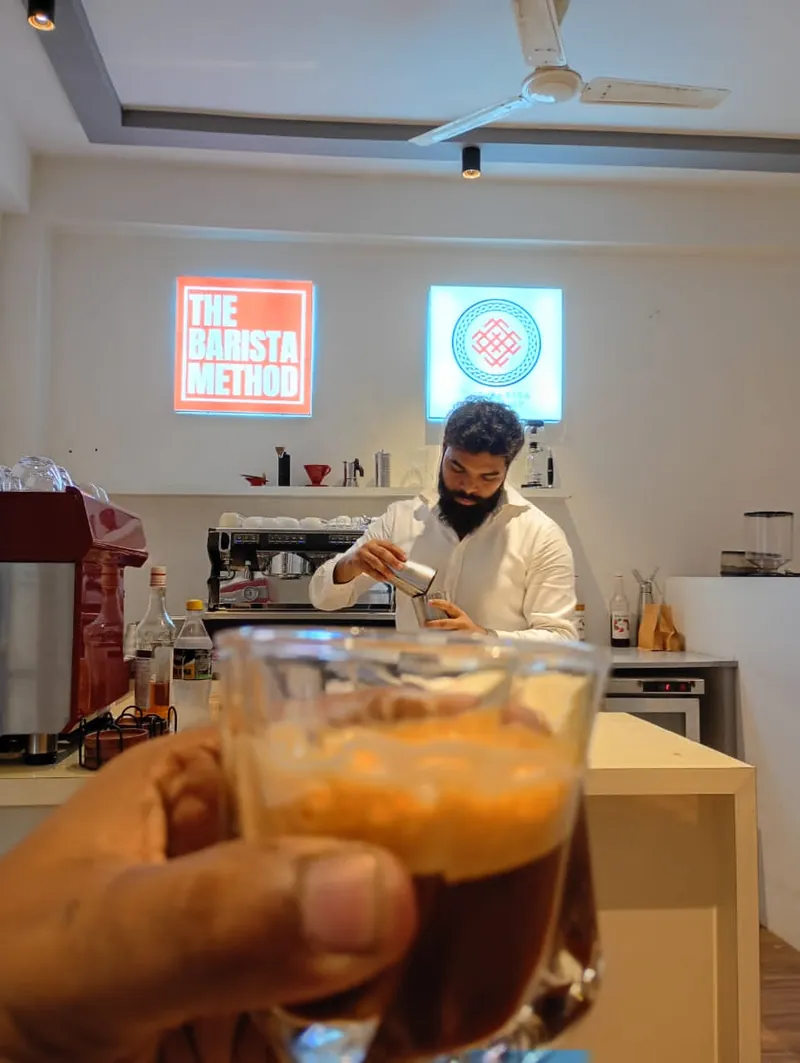
The instructor working at the lab bar, with a glass of espresso held up in the foreground
At the bar
Founder at a glance

Shubham Jaiswal.

Roles
Architect. Founder of The Zariya Collective, Zariya Design Studio and The Zariya Academy
In coffee since
2022, when he established Nen Roasting Company
Practice
Trained barista and specialty coffee practitioner. Currently pursuing the Q Grader (Arabica) certification
LinkedIn
Shubham Jaiswal
Visit

Where we are.

Academy
The Zariya Academy, part of The Zariya Collective
Location
Nazirabad, Kolkata, West Bengal. The exact pin reaches you on WhatsApp.
WhatsApp
+91 74396 51029
Email
info.zariya.services@gmail.com
Instagram
@the_barista_method

Apply